ASPICE

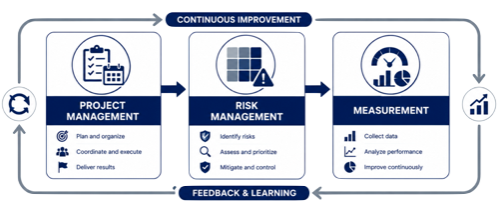
Overview of ASPICE 4.0 Management Processes including Project Management Risk Management and Measurement

ASPICE 4.0 Management Processes Explained

ASPICE 4.0 Management Processes Explained Successful automotive development requires more than excellent engineering. Even the best system, software, and hardware engineers cannot deliver successful products without effective project planning, risk management, and performance monitoring. This is where the ASPICE 4.0 Management Process Group (MAN) comes into play. The Management Processes provide the framework for planning, …

ASPICE 4.0 Management Processes Explained Read More »

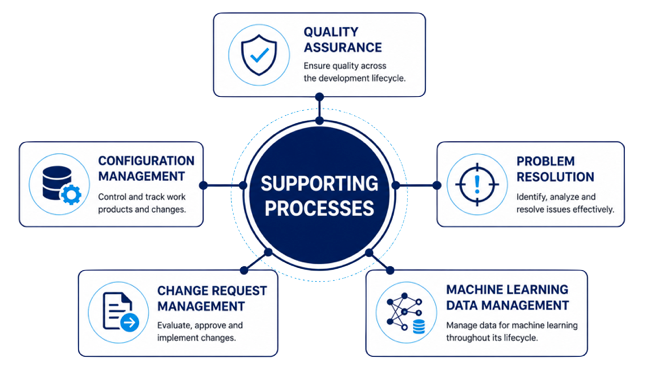
Overview of ASPICE 4.0 Supporting Processes including quality assurance configuration management problem resolution change management and machine learning data management

ASPICE 4.0 Supporting Processes Explained

ASPICE 4.0 Supporting Processes Explained When engineers think about ASPICE, they often focus on System Engineering, Software Engineering, or Hardware Engineering. However, successful automotive development depends on much more than engineering activities alone. Projects also require quality assurance, configuration control, issue management, change management, and increasingly, machine learning data management. This is where the ASPICE …

ASPICE 4.0 Supporting Processes Explained Read More »

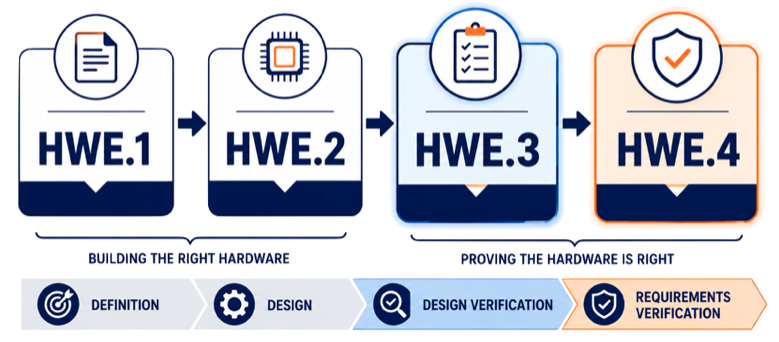
Overview of ASPICE 4.0 Hardware Engineering processes including HWE.1 HWE.2 HWE.3 and HWE.4

ASPICE 4.0 Hardware Engineering Explained

ASPICE 4.0 Hardware Engineering Explained Modern vehicles rely on sophisticated electronic hardware to deliver functionality, safety, connectivity, and performance. Electronic Control Units (ECUs), sensors, power electronics, communication interfaces, and processing hardware form the foundation upon which automotive software operates. As vehicle complexity continues to increase, hardware development requires structured engineering processes that ensure quality, traceability, …

ASPICE 4.0 Hardware Engineering Explained Read More »

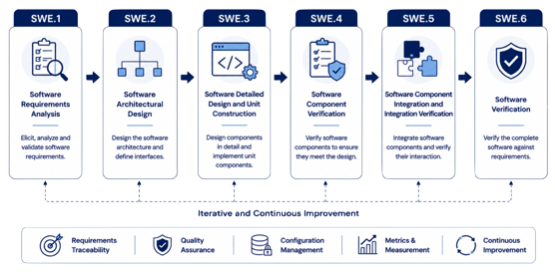
Overview of ASPICE Software Engineering processes including SWE.1 SWE.2 SWE.3 SWE.4 SWE.5 and SWE.6

ASPICE Software Engineering Explained

ASPICE Software Engineering Explained Software has become one of the most important elements of modern vehicle development. From powertrain control and body electronics to advanced driver assistance systems and software-defined vehicles, software functionality continues to increase in complexity and importance. As a result, organizations require structured development processes to ensure software quality, traceability, and reliability. …

ASPICE Software Engineering Explained Read More »

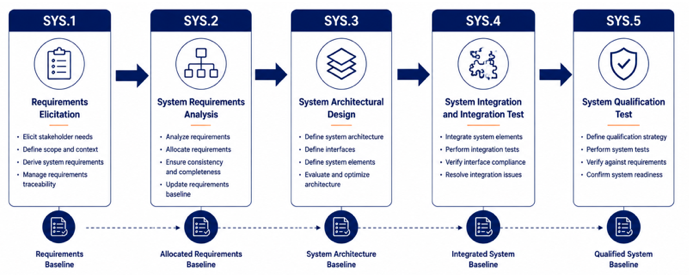
ASPICE System Engineering process group overview including SYS.1 SYS.2 SYS.3 SYS.4 and SYS.5

ASPICE System Engineering Explained

ASPICE System Engineering Explained Modern vehicles are highly complex systems consisting of hardware, software, sensors, actuators, communication networks, and numerous interacting functions. To manage this complexity, automotive development requires a structured systems engineering approach that ensures customer requirements are transformed into complete and verified system solutions. This is exactly the purpose of the ASPICE System …

ASPICE System Engineering Explained Read More »

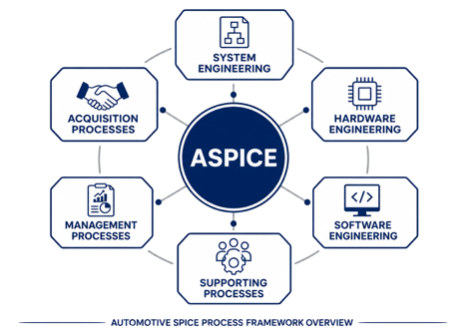
Overview of ASPICE process groups including system engineering software engineering hardware engineering supporting and management processes

ASPICE Process Groups Explained

ASPICE Process Groups Explained ASPICE has become one of the most important process assessment frameworks in the automotive industry. Many engineers initially associate ASPICE primarily with software development. However, ASPICE covers much more than software alone. Modern vehicles are complex systems consisting of hardware, software, systems engineering activities, management processes, and supporting processes. To address …

ASPICE Process Groups Explained Read More »

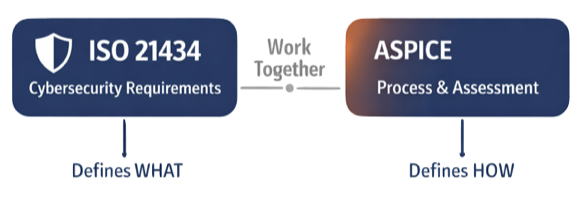
ASPICE for Cybersecurity overview showing secure automotive development and cybersecurity engineering processes

ASPICE for Cybersecurity Explained – Automotive Cybersecurity Processes

ASPICE for Cybersecurity Explained – Automotive Cybersecurity Processes Modern vehicles are becoming increasingly connected, software-driven, and dependent on complex electronic architectures. Features such as over-the-air updates, vehicle connectivity, cloud integration, and autonomous driving capabilities significantly increase cybersecurity exposure. As cybersecurity risks continue to grow, automotive manufacturers and suppliers must ensure that cybersecurity is integrated into …

ASPICE for Cybersecurity Explained – Automotive Cybersecurity Processes Read More »

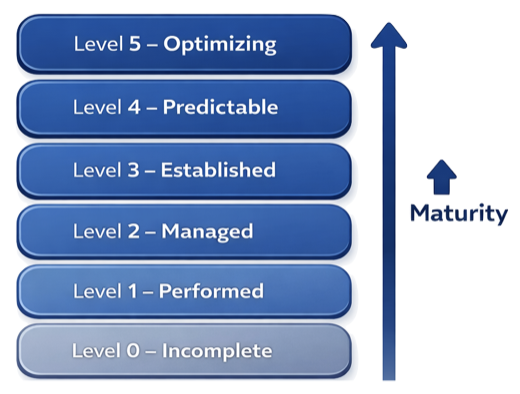
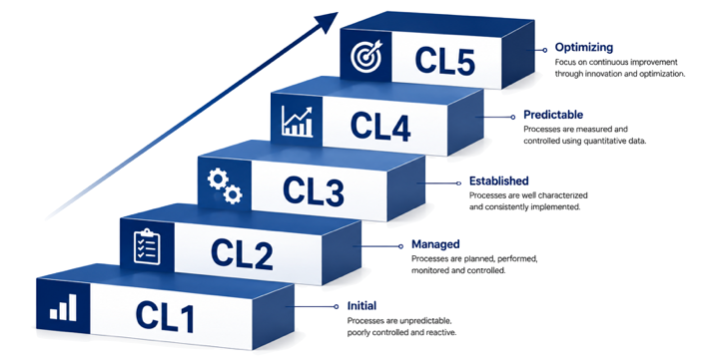
ASPICE capability levels from level 0 incomplete to level 5 optimizing process maturity model

ASPICE Explained – Automotive Process Standard

ASPICE Explained – Automotive Process Standard Why ASPICE Matters in Automotive Development Modern automotive systems are becoming increasingly complex. Vehicles rely on software, electronics, and distributed architectures to perform critical functions. With this complexity comes a major challenge: How can companies ensure that systems are developed in a structured, reliable, and repeatable way? This is …

ASPICE Explained – Automotive Process Standard Read More »

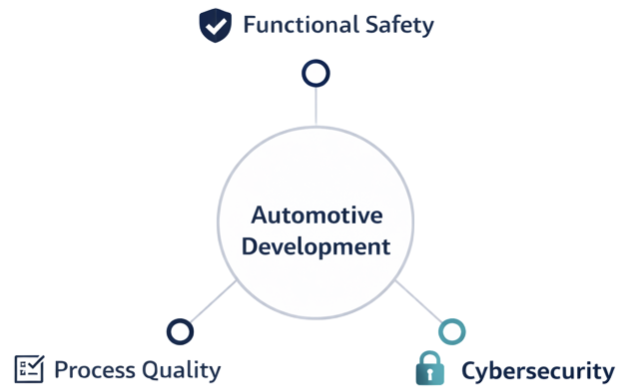
overview of automotive standards including ISO 26262 ASPICE ISO 21434 and SOTIF in modern vehicle development

Automotive Standards Explained – ISO 26262, ASPICE & Cybersecurity

Automotive Standards Explained – ISO 26262, ASPICE & Cybersecurity Why Are There So Many Automotive Standards? Modern vehicles are no longer purely mechanical systems. They are complex, software-driven platforms that combine electronics, connectivity, and intelligent behavior. With this increasing complexity comes a critical challenge: How can safety, security, and quality be ensured across such systems? …

Automotive Standards Explained – ISO 26262, ASPICE & Cybersecurity Read More »

Shopping Cart
Cookie Consent with Real Cookie Banner