Month: September 2026

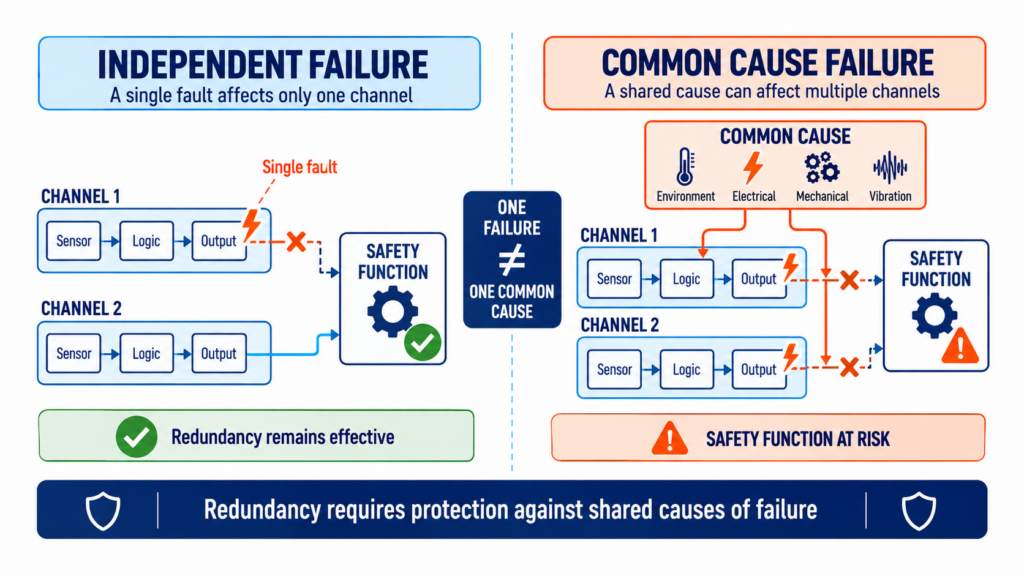
ISO 13849 Common Cause Failure comparison showing independent failure versus one common cause affecting redundant safety channels

ISO 13849 Common Cause Failure Explained – CCF and the 65-Point Assessment

ISO 13849 Common Cause Failure Explained – CCF and the 65-Point Assessment Redundancy is an important design principle in many safety-related control systems. Two independent channels can help ensure that a single component failure does not lead to the loss of the safety function. However, redundancy only provides the intended benefit if both channels are …

ISO 13849 Common Cause Failure Explained – CCF and the 65-Point Assessment Read More »
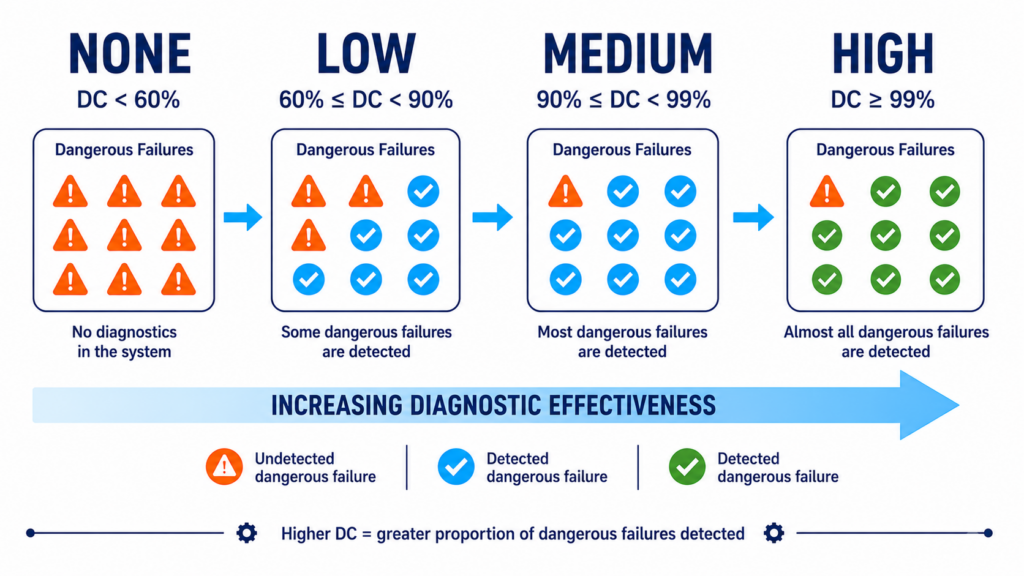
ISO 13849 Diagnostic Coverage classes None, Low, Medium and High with DC percentage ranges

ISO 13849 Diagnostic Coverage Explained – DC and DCavg

ISO 13849 Diagnostic Coverage Explained – DC and DCavg Diagnostic measures are an important part of many safety-related control systems designed according to ISO 13849. While reliable components reduce the probability of dangerous failures occurring, diagnostics help detect dangerous failures when they occur. This concept is described by Diagnostic Coverage (DC). For the evaluation of …

ISO 13849 Diagnostic Coverage Explained – DC and DCavg Read More »

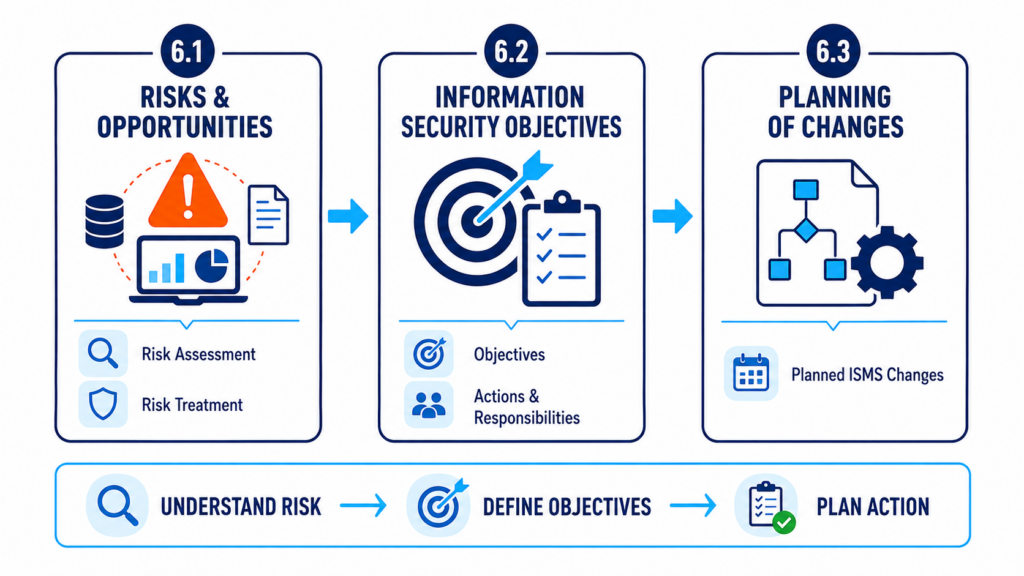
ISO IEC 27001 Clause 6 Planning overview showing risks and opportunities, information security objectives and planning of ISMS changes

ISO/IEC 27001 Clause 6 Explained – Planning for Information Security

ISO/IEC 27001 Clause 6 Explained – Planning for Information Security Effective information security requires more than identifying risks or defining security policies. Organizations also need a structured approach for deciding what needs to be addressed, which objectives should be achieved and how planned changes to the Information Security Management System are implemented. This is the …

ISO/IEC 27001 Clause 6 Explained – Planning for Information Security Read More »

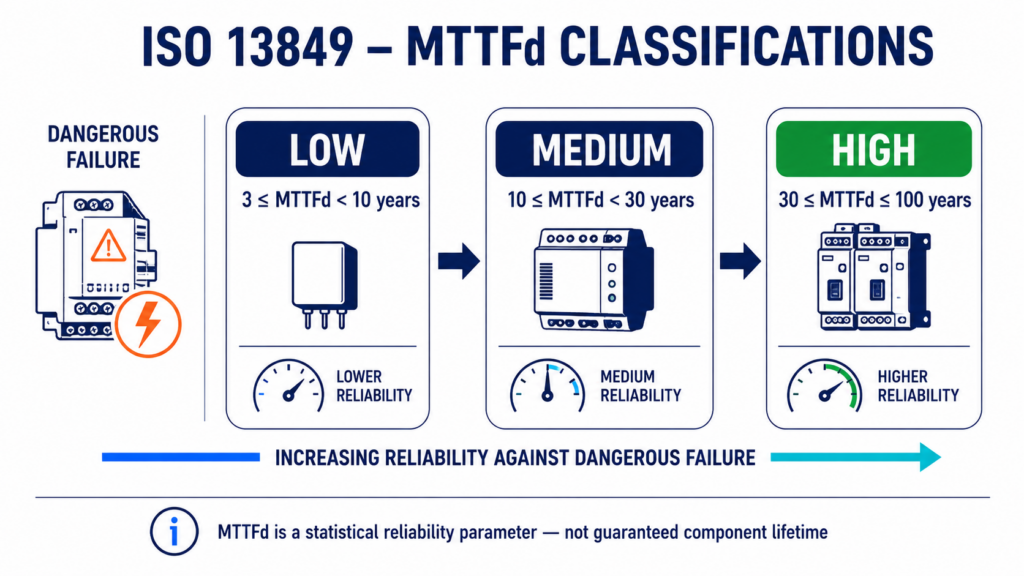
ISO 13849 MTTFd classifications Low, Medium and High showing increasing reliability against dangerous failure

ISO 13849 MTTFd Explained – Mean Time to Dangerous Failure

ISO 13849 MTTFd Explained – Mean Time to Dangerous Failure Reliability is an important part of evaluating safety-related control systems according to ISO 13849. One of the key parameters used for this purpose is MTTFd – Mean Time to Dangerous Failure. MTTFd describes the expected reliability of a component or channel with respect to failures …

ISO 13849 MTTFd Explained – Mean Time to Dangerous Failure Read More »

Shopping Cart
Cookie Consent with Real Cookie Banner