Machine Safety

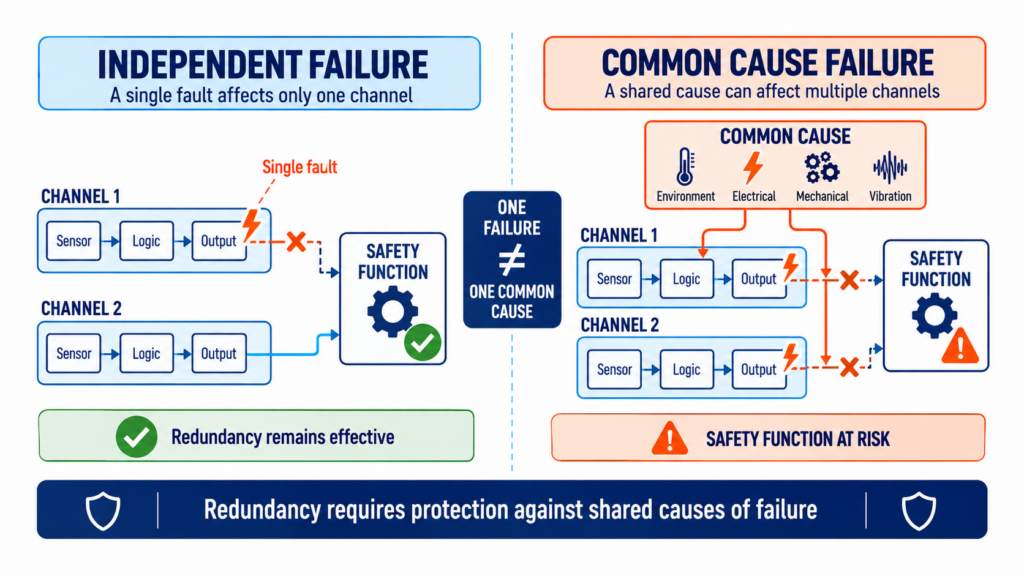
ISO 13849 Common Cause Failure comparison showing independent failure versus one common cause affecting redundant safety channels

ISO 13849 Common Cause Failure Explained – CCF and the 65-Point Assessment

ISO 13849 Common Cause Failure Explained – CCF and the 65-Point Assessment Redundancy is an important design principle in many safety-related control systems. Two independent channels can help ensure that a single component failure does not lead to the loss of the safety function. However, redundancy only provides the intended benefit if both channels are …

ISO 13849 Common Cause Failure Explained – CCF and the 65-Point Assessment Read More »
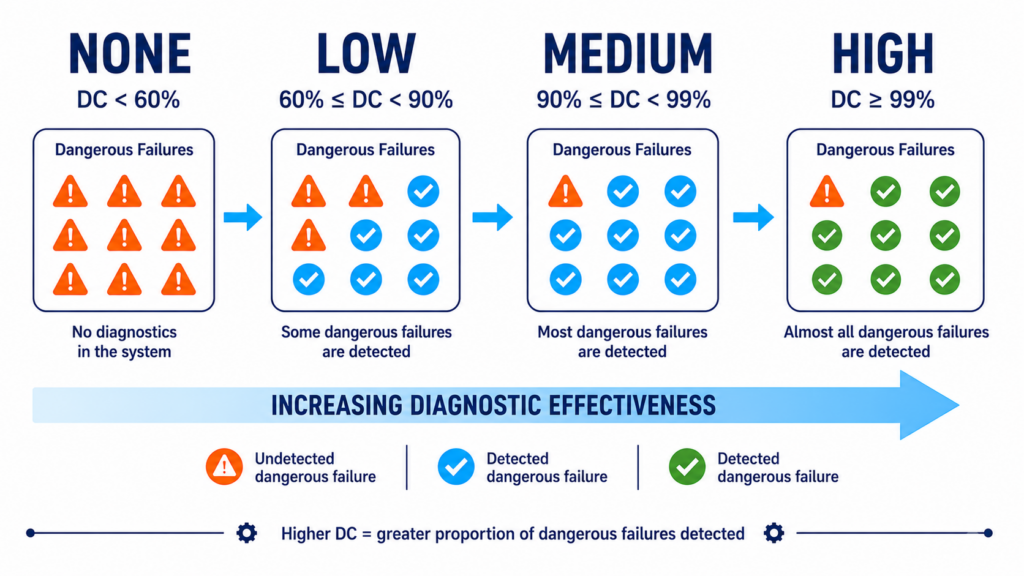
ISO 13849 Diagnostic Coverage classes None, Low, Medium and High with DC percentage ranges

ISO 13849 Diagnostic Coverage Explained – DC and DCavg

ISO 13849 Diagnostic Coverage Explained – DC and DCavg Diagnostic measures are an important part of many safety-related control systems designed according to ISO 13849. While reliable components reduce the probability of dangerous failures occurring, diagnostics help detect dangerous failures when they occur. This concept is described by Diagnostic Coverage (DC). For the evaluation of …

ISO 13849 Diagnostic Coverage Explained – DC and DCavg Read More »

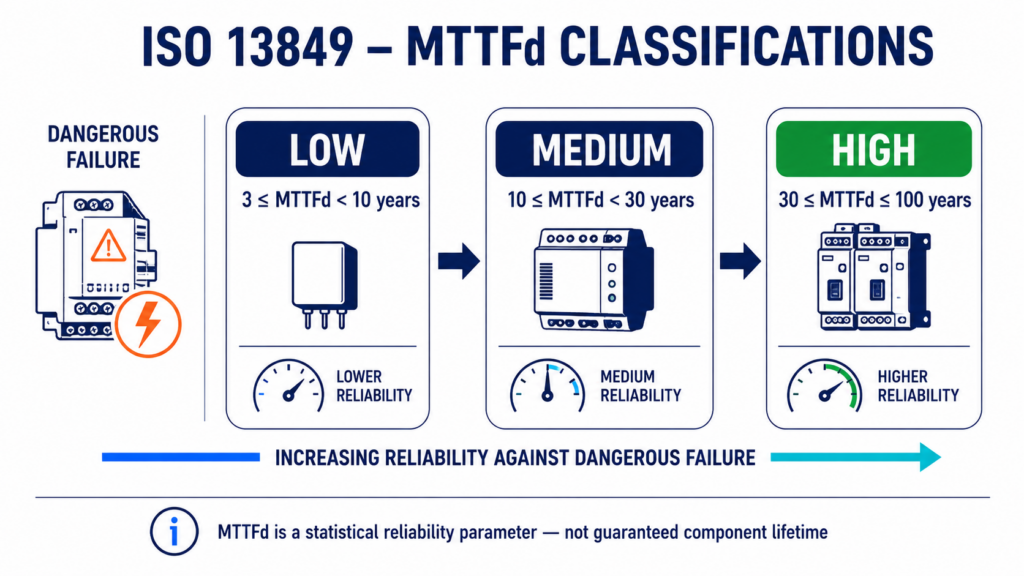
ISO 13849 MTTFd classifications Low, Medium and High showing increasing reliability against dangerous failure

ISO 13849 MTTFd Explained – Mean Time to Dangerous Failure

ISO 13849 MTTFd Explained – Mean Time to Dangerous Failure Reliability is an important part of evaluating safety-related control systems according to ISO 13849. One of the key parameters used for this purpose is MTTFd – Mean Time to Dangerous Failure. MTTFd describes the expected reliability of a component or channel with respect to failures …

ISO 13849 MTTFd Explained – Mean Time to Dangerous Failure Read More »

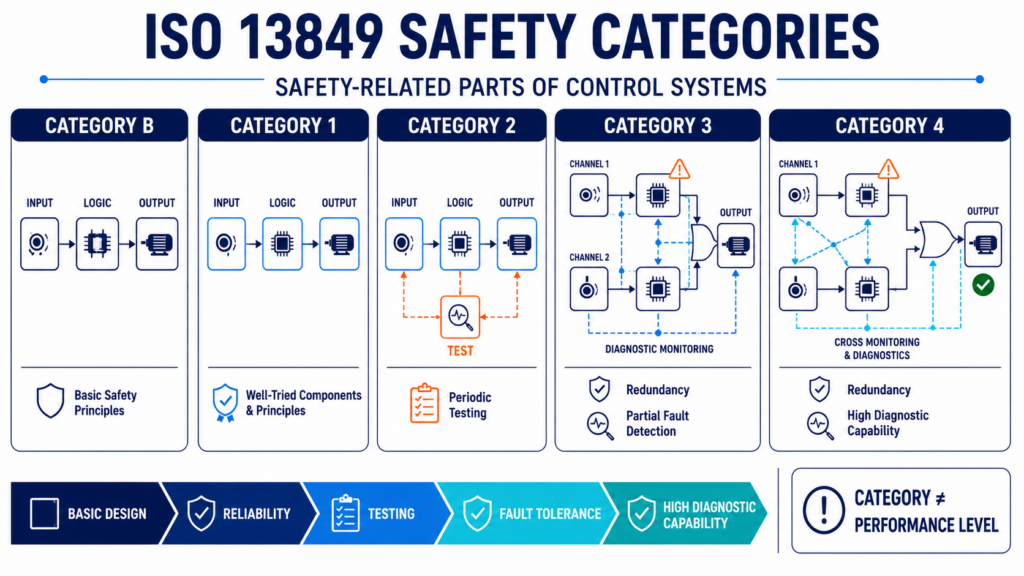
ISO 13849 Categories B, 1, 2, 3 and 4 showing single-channel, tested and redundant safety-related control system architectures

ISO 13849 Categories Explained – Categories B, 1, 2, 3 and 4

ISO 13849 Categories Explained – Categories B, 1, 2, 3 and 4 ISO 13849 uses different architectural Categories to describe important characteristics of safety-related parts of control systems, commonly referred to as SRP/CS. The Categories range from Category B to Categories 1, 2, 3 and 4. They define requirements related to the architecture of the …

ISO 13849 Categories Explained – Categories B, 1, 2, 3 and 4 Read More »

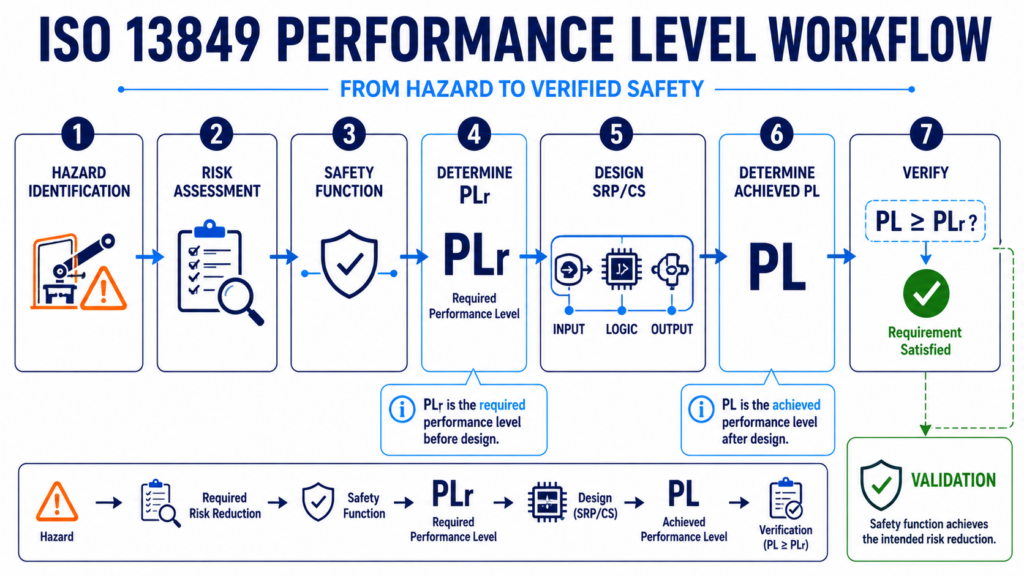
ISO 13849 Performance Level workflow from hazard identification and risk assessment to PLr, safety-related control system design, achieved PL and verification

ISO 13849 Performance Levels Explained – PL a to PL e and PLr

ISO 13849 Performance Levels Explained – PL a to PL e and PLr Functional safety in machinery is not simply about adding safety components. A safety-related control function must provide a level of risk reduction appropriate to the hazard it is intended to control. This is where Performance Levels become important. ISO 13849 uses Performance Levels …

ISO 13849 Performance Levels Explained – PL a to PL e and PLr Read More »

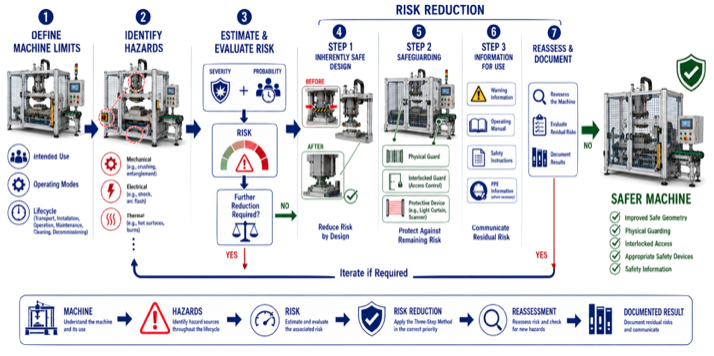
ISO 12100 machine safety workflow showing hazard identification, risk estimation, risk evaluation, risk reduction and residual risk assessment

ISO 12100 Explained – Machine Safety, Risk Assessment & Risk Reduction

ISO 12100 Explained – Machine Safety, Risk Assessment & Risk Reduction Every machine introduces potential hazards. Moving components, sharp edges, electrical energy, high temperatures, unexpected startup, or stored energy can all create situations in which people may be harmed. The challenge for machine manufacturers is therefore not simply to identify hazards, but to systematically assess …

ISO 12100 Explained – Machine Safety, Risk Assessment & Risk Reduction Read More »

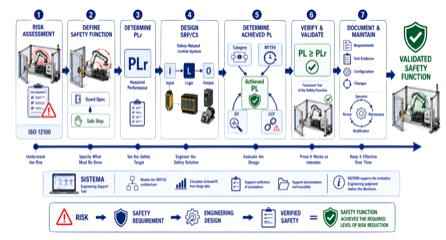
ISO 13849 workflow from hazard identification and risk assessment to safety function, required Performance Level, verification and validation

ISO 13849 Explained – Functional Safety of Machinery

ISO 13849 Explained – Functional Safety of Machinery Modern machinery relies heavily on electrical, electronic, pneumatic, hydraulic, and programmable control systems. These systems improve productivity and automation, but they also introduce risks when failures can lead to hazardous machine behavior. A robot that fails to stop when an operator enters its workspace, a press that …

ISO 13849 Explained – Functional Safety of Machinery Read More »

Shopping Cart
Cookie Consent with Real Cookie Banner