ASPICE for Cybersecurity Explained – Automotive Cybersecurity Processes
Modern vehicles are becoming increasingly connected, software-driven, and dependent on complex electronic architectures. Features such as over-the-air updates, vehicle connectivity, cloud integration, and autonomous driving capabilities significantly increase cybersecurity exposure.
As cybersecurity risks continue to grow, automotive manufacturers and suppliers must ensure that cybersecurity is integrated into the engineering process from the beginning.
ASPICE for Cybersecurity extends traditional Automotive SPICE concepts with cybersecurity-related engineering activities and process expectations. Together with ISO 21434, it helps organizations establish structured and scalable cybersecurity development processes.
In this article, you will learn how ASPICE for Cybersecurity works, why it matters, and how it supports secure automotive development.
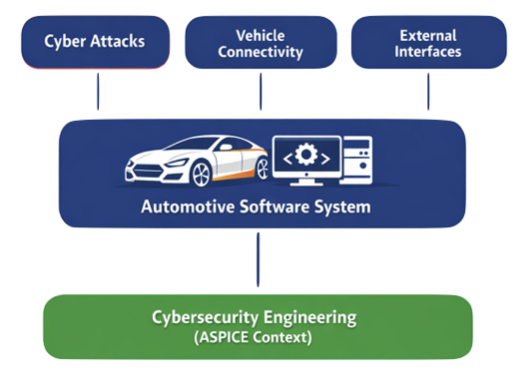
Overview of ASPICE for Cybersecurity in modern automotive engineering
Why Automotive Cybersecurity Matters
Modern vehicles contain dozens of interconnected ECUs, communication networks, sensors, gateways, and cloud interfaces.
These systems exchange large amounts of data and increasingly interact with external environments. As connectivity grows, the potential attack surface also increases.
Cybersecurity failures can lead to:
unauthorized vehicle access
manipulation of safety-critical systems
loss of data integrity
operational disruptions
safety risks
Because of this, cybersecurity is no longer treated as an isolated technical topic. It has become an essential engineering discipline integrated into the entire vehicle development lifecycle.
OEMs now expect suppliers to demonstrate not only technical cybersecurity capabilities but also mature cybersecurity engineering processes.
What is ASPICE for Cybersecurity?
ASPICE for Cybersecurity refers to the integration of cybersecurity engineering practices into Automotive SPICE-based development processes.
Traditional ASPICE focuses on process quality, traceability, verification, and engineering maturity. Cybersecurity extensions introduce additional activities related to:
threat analysis
risk assessment
cybersecurity requirements
security verification
vulnerability management
secure architecture development
The goal is to ensure that cybersecurity activities are systematically integrated into automotive development workflows.
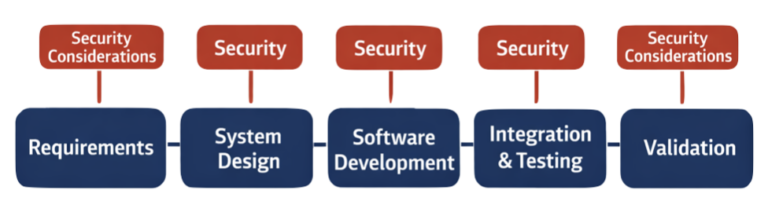
Rather than treating cybersecurity as a final testing activity, ASPICE for Cybersecurity embeds security considerations throughout the engineering lifecycle.
Requirements engineering must include cybersecurity-related requirements derived from threat and risk analysis activities.
System and software architecture development must consider:
secure communication
access control
isolation concepts
attack surface reduction
secure interfaces
Verification and validation activities must evaluate whether cybersecurity objectives are correctly implemented and whether vulnerabilities are sufficiently mitigated.
Traceability also becomes increasingly important. Organizations must maintain consistent links between:
threats
cybersecurity goals
technical requirements
architecture decisions
verification results
This integration ensures that cybersecurity remains visible and manageable throughout development.
Integration of cybersecurity engineering activities into ASPICE development processes
If you want to understand automotive cybersecurity engineering and ASPICE for Cybersecurity in greater depth:
ASPICE for Cybersecurity is closely connected to ISO 21434.
ISO 21434 defines the cybersecurity engineering framework used in automotive projects, including activities such as:
Threat Analysis and Risk Assessment (TARA)
cybersecurity goals
cybersecurity concepts
incident response
continuous cybersecurity activities
ASPICE complements ISO 21434 by focusing more strongly on process capability and engineering maturity.
In practice:
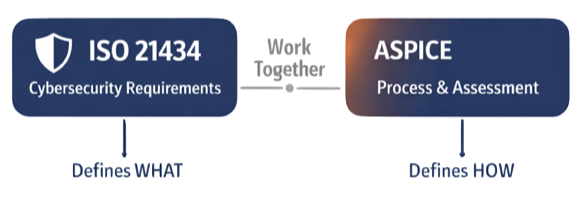
ISO 21434 defines what cybersecurity activities are required
ASPICE evaluates how well these activities are integrated and executed
Together, both frameworks support scalable and auditable automotive cybersecurity engineering.
Integration of ASPICE process maturity and ISO 21434 cybersecurity engineering activities
Outputs of ASPICE for Cybersecurity
ASPICE for Cybersecurity generates multiple important engineering outputs.
Typical outputs include:
cybersecurity requirements
threat analysis results
cybersecurity architectures
secure interface definitions
verification reports
vulnerability assessments
traceability evidence
These outputs support both internal development activities and external assessments performed by OEMs or certification-related organizations.
Strong cybersecurity process integration also improves:
project transparency
engineering consistency
verification quality
long-term maintainability
Challenges in Practice
Implementing ASPICE for Cybersecurity in real automotive projects can be highly challenging.
One major difficulty is the growing complexity of modern software-defined vehicles. Cybersecurity must be coordinated across multiple ECUs, suppliers, communication protocols, and software platforms.
Another challenge is integrating cybersecurity into existing engineering workflows without creating excessive process overhead.
Organizations also struggle with maintaining alignment between:
functional safety
cybersecurity
software engineering
system development
supplier management
Rapidly evolving threats create additional pressure. Unlike traditional engineering requirements, cybersecurity risks continuously change over time.
This requires organizations to establish engineering processes that remain adaptable throughout the vehicle lifecycle.
Common Misunderstandings
One common misconception is that cybersecurity can be added at the end of development through penetration testing alone.
In reality, secure systems require cybersecurity integration throughout architecture design, requirements engineering, implementation, and verification activities.
Another misunderstanding is assuming that ISO 21434 alone is sufficient. While the standard defines cybersecurity activities, organizations also need mature engineering processes to implement them effectively.
It is also often assumed that cybersecurity only concerns software teams. In practice, cybersecurity affects:
system architecture
hardware design
communication networks
supplier coordination
operational processes
Finally, some organizations focus heavily on assessment results while overlooking the actual engineering quality behind the processes.
Summary
ASPICE for Cybersecurity integrates cybersecurity engineering into automotive development processes.
Together with ISO 21434, it helps organizations establish structured, scalable, and auditable cybersecurity workflows for modern software-defined vehicles.
Cybersecurity is no longer an isolated technical activity. It is now a central engineering discipline that influences requirements, architecture, verification, and system development throughout the entire lifecycle.
Understanding ASPICE for Cybersecurity is essential for anyone involved in modern automotive engineering, cybersecurity development, or software-defined vehicle architectures.
If you prefer a visual explanation, this video explains ASPICE for Cybersecurity step by step: