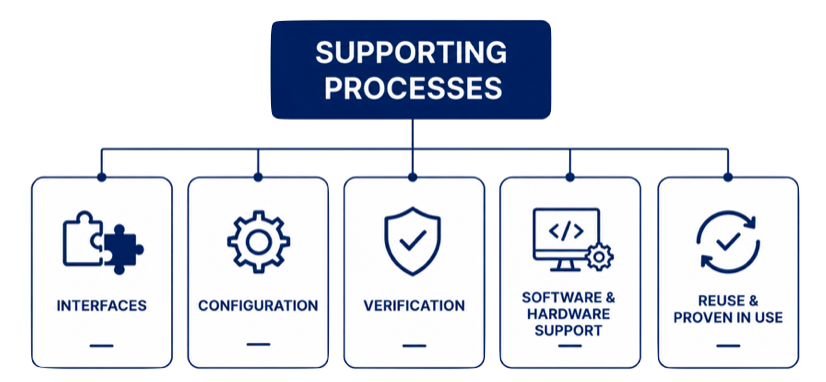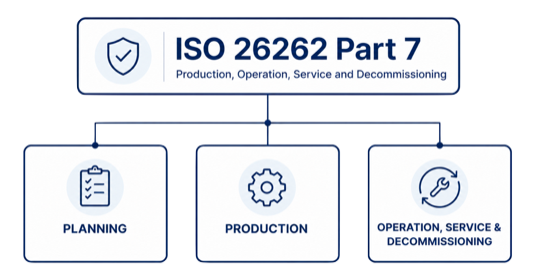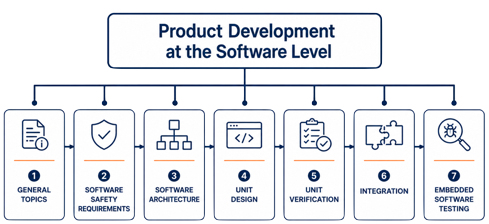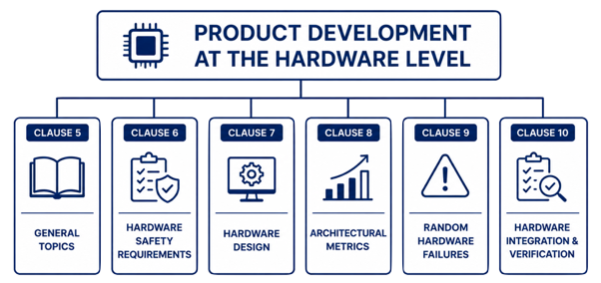
ISO 26262 functional safety lifecycle overview from concept phase to production and operation

Functional Safety Lifecycle Explained – ISO 26262 Overview

Functional Safety Lifecycle Explained – ISO 26262 Overview Why the Functional Safety Lifecycle Matters Modern automotive systems are becoming increasingly complex. Vehicles rely on a combination of hardware and software to perform safety-critical functions such as braking, steering, and driver assistance. Ensuring safety in such systems cannot be achieved through isolated activities. Instead, safety must …

Functional Safety Lifecycle Explained – ISO 26262 Overview Read More »

Safety Goals in ISO 26262

Safety Goals Explained – Functional Safety in ISO 26262

Safety Goals Explained – Functional Safety in ISO 26262 Why Safety Goals Matter in Functional Safety Modern vehicles rely on complex electronic and software-based systems to control critical functions such as braking, steering, and acceleration. When these systems fail, the consequences can be severe. This is why functional safety is a central aspect of automotive …

Safety Goals Explained – Functional Safety in ISO 26262 Read More »

HARA in ISO 26262 - From Item Definition to ASIL Classification

HARA Explained – Hazard Analysis and Risk Assessment (ISO 26262)

HARA Explained – Hazard Analysis and Risk Assessment (ISO 26262) Why HARA Matters in Functional Safety Modern vehicles rely heavily on complex electrical and electronic systems. These systems directly influence vehicle behavior — including braking, steering, and acceleration. But what happens if one of these systems fails? A malfunction may lead to a hazardous situation, …

HARA Explained – Hazard Analysis and Risk Assessment (ISO 26262) Read More »

Overview of ISO 26262 functional safety in automotive systems showing ECUs, sensors, and software components

ISO 26262 Explained – Functional Safety for Road Vehicles

ISO 26262 Explained – Functional Safety for Road Vehicles Why Functional Safety Matters in Modern Vehicles Modern vehicles are no longer purely mechanical systems. Today’s cars are highly complex, software-driven systems consisting of dozens of electronic control units (ECUs) and millions of lines of code. Many of these systems directly influence vehicle behavior, including braking, …

ISO 26262 Explained – Functional Safety for Road Vehicles Read More »

Shopping Cart
Cookie Consent with Real Cookie Banner