Author name: AlexanderWalter

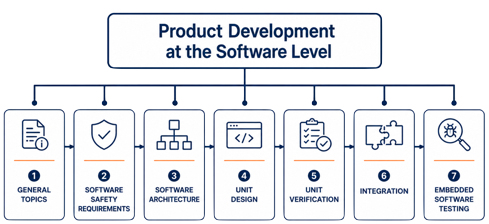
Overview of ISO 26262 Part 6 showing Software Safety Requirements, Software Architecture, Software Unit Design, Software Verification, and Software Integration Testing

ISO 26262 Part 6 Explained – Product Development at the Software Level

ISO 26262 Part 6 Explained – Product Development at the Software Level Software has become the defining element of modern vehicles. From braking and steering to battery management, powertrain control, and advanced driver assistance systems (ADAS), software now performs many of the functions that directly influence vehicle safety. As software complexity continues to increase, so …

ISO 26262 Part 6 Explained – Product Development at the Software Level Read More »

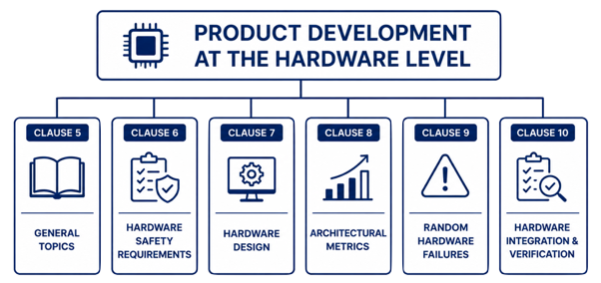
Overview of ISO 26262 Part 5 showing Hardware Safety Requirements, Hardware Design, Hardware Architectural Metrics, Random Hardware Failure Evaluation, and Hardware Verification

ISO 26262 Part 5 Explained – Product Development at the Hardware Level

ISO 26262 Part 5 Explained – Product Development at the Hardware Level Modern vehicles rely on highly complex electronic hardware to perform safety-critical functions such as braking, steering, battery management, and advanced driver assistance. To ensure that these systems remain safe even in the presence of hardware failures, automotive engineers must follow a structured hardware …

ISO 26262 Part 5 Explained – Product Development at the Hardware Level Read More »

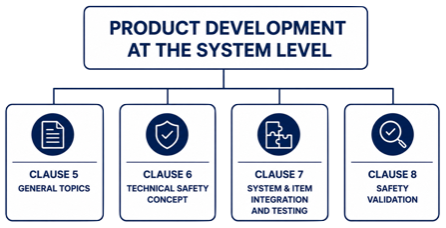
Overview of ISO 26262 Part 4 showing General Topics, Technical Safety Concept, System Integration and Testing, and Safety Validation

ISO 26262 Part 4 Explained – Product Development at the System Level

ISO 26262 Part 4 Explained – Product Development at the System Level Developing a safe automotive system requires much more than implementing safety mechanisms in hardware or software. Before detailed development begins, engineers must translate high-level safety objectives into a structured system architecture that ensures Functional Safety throughout the vehicle lifecycle. This is the purpose …

ISO 26262 Part 4 Explained – Product Development at the System Level Read More »

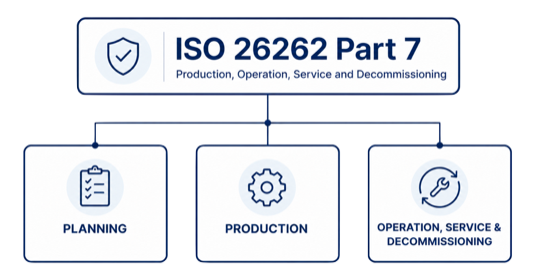
Overview of the structure of ISO 26262 Part 2 including Overall Safety Management, Project Dependent Safety Management, and Production, Operation, Service and Decommissioning

ISO 26262 Part 2 Explained – Management of Functional Safety

ISO 26262 Part 2 Explained – Management of Functional Safety Functional Safety is not achieved through technical solutions alone. Even the most advanced hardware and software architectures require structured planning, clear responsibilities, and systematic oversight to ensure that safety objectives are consistently achieved throughout the vehicle lifecycle. This is exactly the purpose of ISO 26262 …

ISO 26262 Part 2 Explained – Management of Functional Safety Read More »

Overview of ASPICE 4.0 Management Processes including Project Management Risk Management and Measurement

ASPICE 4.0 Management Processes Explained

ASPICE 4.0 Management Processes Explained Successful automotive development requires more than excellent engineering. Even the best system, software, and hardware engineers cannot deliver successful products without effective project planning, risk management, and performance monitoring. This is where the ASPICE 4.0 Management Process Group (MAN) comes into play. The Management Processes provide the framework for planning, …

ASPICE 4.0 Management Processes Explained Read More »

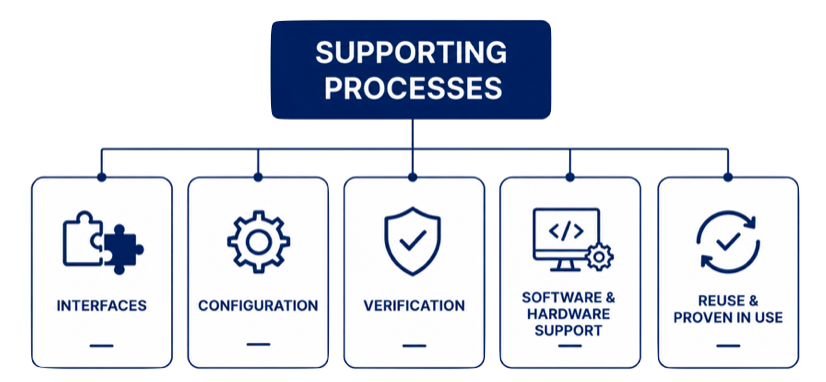
Overview of ASPICE 4.0 Supporting Processes including quality assurance configuration management problem resolution change management and machine learning data management

ASPICE 4.0 Supporting Processes Explained

ASPICE 4.0 Supporting Processes Explained When engineers think about ASPICE, they often focus on System Engineering, Software Engineering, or Hardware Engineering. However, successful automotive development depends on much more than engineering activities alone. Projects also require quality assurance, configuration control, issue management, change management, and increasingly, machine learning data management. This is where the ASPICE …

ASPICE 4.0 Supporting Processes Explained Read More »

Overview of ASPICE 4.0 Hardware Engineering processes including HWE.1 HWE.2 HWE.3 and HWE.4

ASPICE 4.0 Hardware Engineering Explained

ASPICE 4.0 Hardware Engineering Explained Modern vehicles rely on sophisticated electronic hardware to deliver functionality, safety, connectivity, and performance. Electronic Control Units (ECUs), sensors, power electronics, communication interfaces, and processing hardware form the foundation upon which automotive software operates. As vehicle complexity continues to increase, hardware development requires structured engineering processes that ensure quality, traceability, …

ASPICE 4.0 Hardware Engineering Explained Read More »

Overview of ASPICE Software Engineering processes including SWE.1 SWE.2 SWE.3 SWE.4 SWE.5 and SWE.6

ASPICE Software Engineering Explained

ASPICE Software Engineering Explained Software has become one of the most important elements of modern vehicle development. From powertrain control and body electronics to advanced driver assistance systems and software-defined vehicles, software functionality continues to increase in complexity and importance. As a result, organizations require structured development processes to ensure software quality, traceability, and reliability. …

ASPICE Software Engineering Explained Read More »

Shopping Cart
Cookie Consent with Real Cookie Banner