Author name: AlexanderWalter

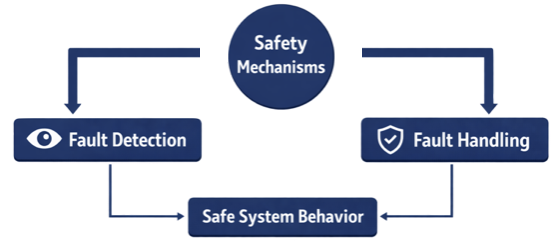
types of safety mechanisms showing fault detection and fault handling in ISO 26262 functional safety

Safety Mechanisms Explained – ISO 26262 in Practice

Safety Mechanisms Explained – ISO 26262 in Practice Why Safety Mechanisms Matter in Automotive Systems Modern vehicles depend on complex electrical and electronic systems to perform safety-critical functions such as braking, steering, and acceleration. But no system is perfect. Hardware components can fail. Software can contain defects. Sensors can provide incorrect data. In safety-critical environments, …

Safety Mechanisms Explained – ISO 26262 in Practice Read More »
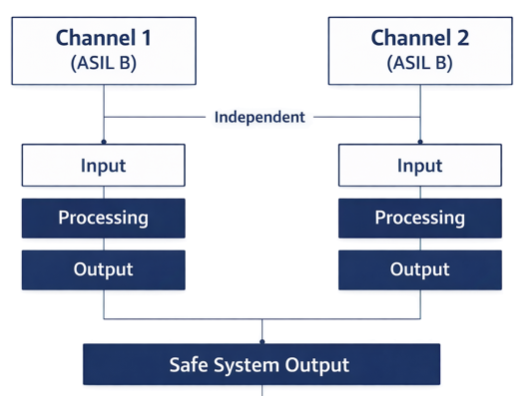
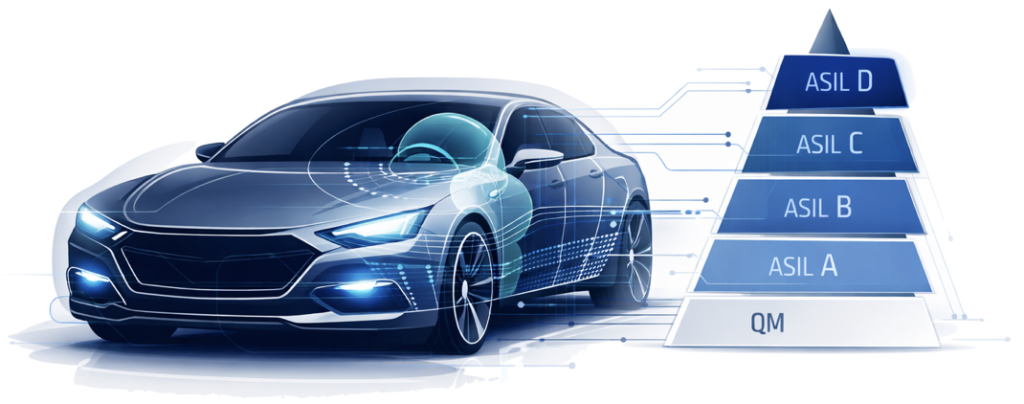
ASIL decomposition from ASIL D into two ASIL B channels in ISO 26262 functional safety

ASIL Decomposition Explained – ISO 26262 Advanced Concept

ASIL Decomposition Explained – ISO 26262 Advanced Concept Why ASIL Decomposition Matters in Functional Safety In modern automotive systems, ensuring functional safety often requires meeting very high safety integrity levels. For critical functions such as braking or steering, this typically means achieving ASIL D, the highest Automotive Safety Integrity Level defined in ISO 26262. However, …

ASIL Decomposition Explained – ISO 26262 Advanced Concept Read More »

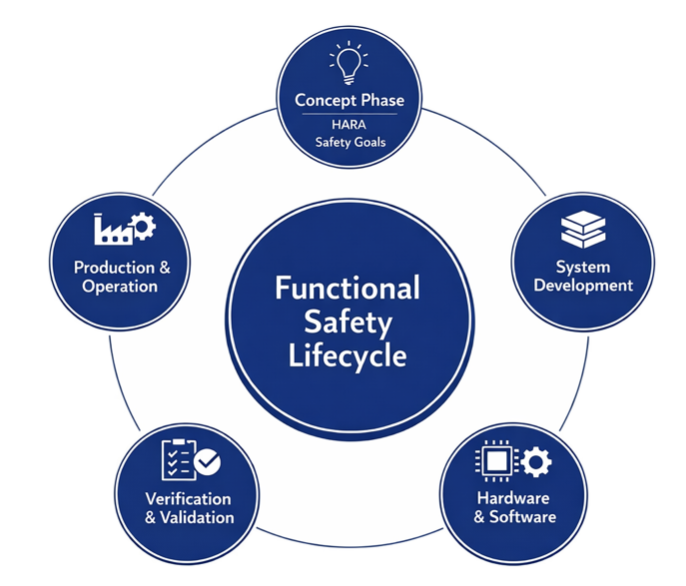
ISO 26262 functional safety lifecycle overview from concept phase to production and operation

Functional Safety Lifecycle Explained – ISO 26262 Overview

Functional Safety Lifecycle Explained – ISO 26262 Overview Why the Functional Safety Lifecycle Matters Modern automotive systems are becoming increasingly complex. Vehicles rely on a combination of hardware and software to perform safety-critical functions such as braking, steering, and driver assistance. Ensuring safety in such systems cannot be achieved through isolated activities. Instead, safety must …

Functional Safety Lifecycle Explained – ISO 26262 Overview Read More »

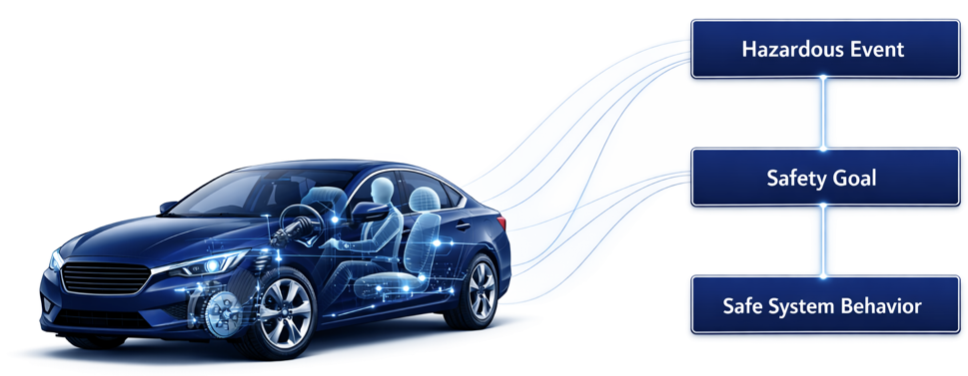
Safety Goals in ISO 26262

Safety Goals Explained – Functional Safety in ISO 26262

Safety Goals Explained – Functional Safety in ISO 26262 Why Safety Goals Matter in Functional Safety Modern vehicles rely on complex electronic and software-based systems to control critical functions such as braking, steering, and acceleration. When these systems fail, the consequences can be severe. This is why functional safety is a central aspect of automotive …

Safety Goals Explained – Functional Safety in ISO 26262 Read More »

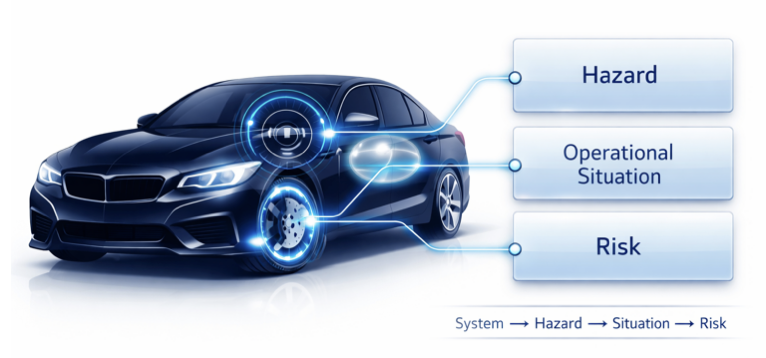
HARA in ISO 26262 - From Item Definition to ASIL Classification

HARA Explained – Hazard Analysis and Risk Assessment (ISO 26262)

HARA Explained – Hazard Analysis and Risk Assessment (ISO 26262) Why HARA Matters in Functional Safety Modern vehicles rely heavily on complex electrical and electronic systems. These systems directly influence vehicle behavior — including braking, steering, and acceleration. But what happens if one of these systems fails? A malfunction may lead to a hazardous situation, …

HARA Explained – Hazard Analysis and Risk Assessment (ISO 26262) Read More »

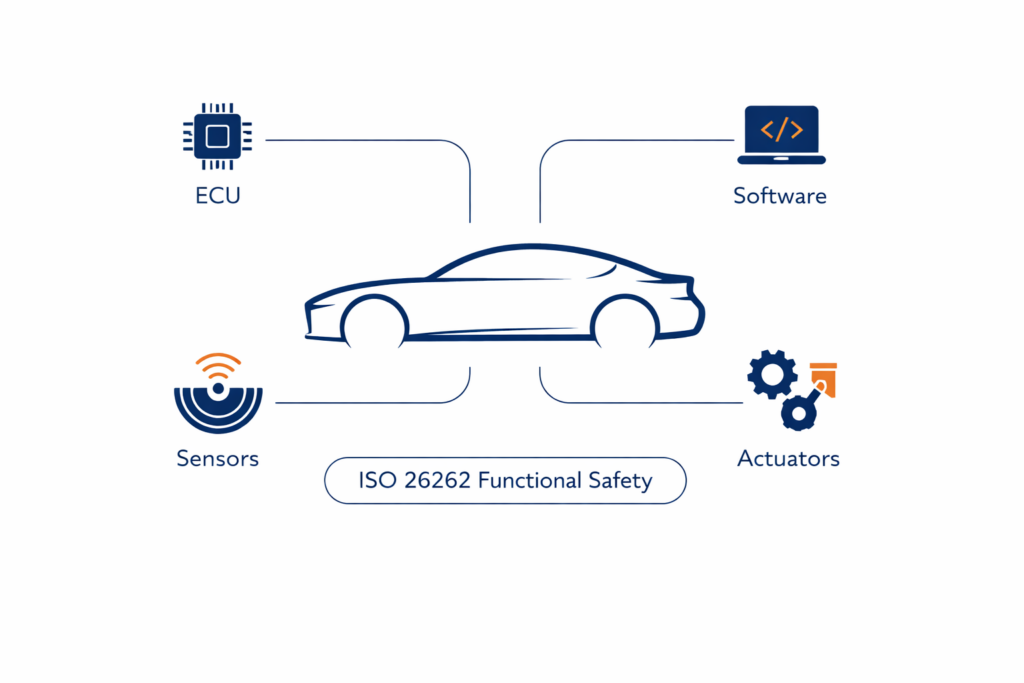
Overview of ISO 26262 functional safety in automotive systems showing ECUs, sensors, and software components

ISO 26262 Explained – Functional Safety for Road Vehicles

ISO 26262 Explained – Functional Safety for Road Vehicles Why Functional Safety Matters in Modern Vehicles Modern vehicles are no longer purely mechanical systems. Today’s cars are highly complex, software-driven systems consisting of dozens of electronic control units (ECUs) and millions of lines of code. Many of these systems directly influence vehicle behavior, including braking, …

ISO 26262 Explained – Functional Safety for Road Vehicles Read More »

Cookie Consent with Real Cookie Banner